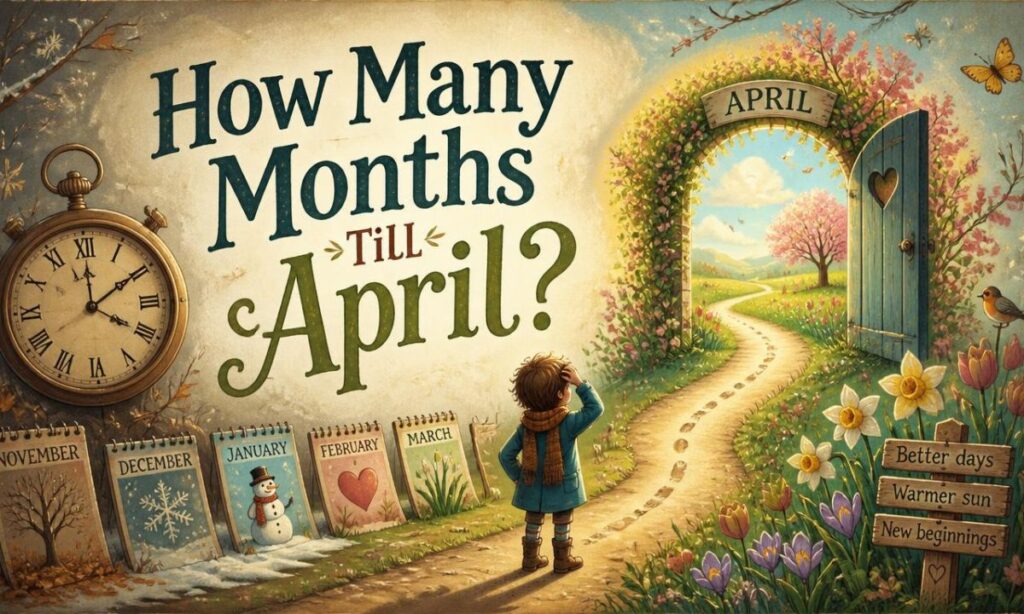
When someone asks, “how many months till April?” they are usually looking ahead to a date that feels just far enough away to need counting. April might be connected to a birthday, a holiday, a trip, a school event, a work deadline, or simply the changing of the seasons. Knowing the exact time remaining makes that future date feel a little more real.
The simple answer depends on which day in April you mean and which reference date you are counting from. April 1 is different from April 15 or April 30, so an accurate answer should consider the exact start date, end date, and the number of complete months and remaining days.
For example, from September 20, 2026, to April 1, 2027, there are about six months and eleven days. If your target is another day in April, the result changes slightly. This is why a Months Calculator or date calculator can be useful when you need more than a rough countdown.
How Many Months Till April From Today?

If today is September 20, 2026, and you are asking about April 2027, the beginning of April is less than seven calendar months away. From September 20 to April 1, the number of months is approximately six months and eleven days.
This is not the same as simply saying “seven months.” A basic count of calendar pages can give a rough idea, while a proper month calculation considers the actual days involved.
The result can also change depending on the April date you have in mind:
- April 1, 2027 is about 6 months and 11 days away from September 20, 2026.
- April 15, 2027 is about 6 months and 26 days away.
- April 20, 2027 is exactly 7 calendar months after September 20, 2026.
- April 30, 2027 is about 7 months and 10 days away.
So, when someone searches “how many months until April,” the first thing to check is the exact day they want. Otherwise, the answer can be a little fuzzy.
How to Calculate Months Until April
Calculating the months until April manually is fairly easy when the dates fall on matching days of the month. Start with the current date, identify the target April date, and count the calendar months between them.
Suppose your start date is September 20, 2026 and your end date is April 20, 2027. Because both dates fall on the 20th day of their respective months, the difference is exactly seven months.
The calculation becomes more interesting when the days don’t match. September 20 to April 1 isn’t a whole-number month difference, so the remaining days need to be included in the result.
A months between two dates calculation may therefore produce an answer such as “6 months and 11 days” rather than simply “6 months.” That extra detail matters when you’re planning something around a specific date.
How Many Months Are Left Until April?
The phrase “how many months are left until April” usually means the number of calendar months remaining before April begins. If you are counting from September, the upcoming months are October, November, December, January, February, and March before April arrives.
However, a calendar count and an exact date count aren’t always identical. A calendar tells you which months remain, while a precise date difference calculation tells you the months and days between two particular dates.
For a quick mental count, you can move month by month:
- September to October — 1 month
- October to November — 2 months
- November to December — 3 months
- December to January — 4 months
- January to February — 5 months
- February to March — 6 months
- March to April — 7 months
This count is useful for a general April countdown, but it assumes you’re comparing equivalent points in each month. Exact dates can produce a slightly different result.
Using a Months Calculator for April
An online Months Calculator makes the process easier when you don’t want to count calendar pages yourself. Usually, you enter a start date and an end date, select the appropriate operation type, and let the calculator produce the result.
Many tools provide fields for Month/Day/Year, while others may use a different date format depending on your location. Some interfaces display a small calendar icon beside the date input, making it easier to select dates without typing them manually.
A typical calculator may include:
- Start date
- End date
- operation type
- Add Months
- Subtract Months
- Months Between
- A calculate button
- A clear button
- The final calculation result
This makes a calculator tool useful not only for finding months until April, but also for other date questions.
Months Between Two Dates and April
If your question is really about the months between two dates, you can use April as either the beginning or ending point.
For example, someone might want to know how many months separate January 10 and April 10. Since the day number is identical, the difference is exactly three months.
But January 10 to April 25 is different. The calculator needs to account for both the complete months and the additional days. This is where months and days can provide a clearer answer than a single decimal number.
A months between dates calculator is especially helpful when dates cross different month lengths. February, for example, has fewer days than March, April, or May, so manually estimating can occasionally lead to an incorrect result.
Add Months to a Date
Sometimes the question isn’t how long until April, but how to add months to a date so you can discover a future date.
For example, adding 7 months to September 20, 2026 gives April 20, 2027. This is an example of month addition, where the number of incoming months is applied to the starting date.
A calculator can handle this using an add months operation. You enter the original date, enter the number of months, and the tool returns the future date.
You might use this method for questions such as:
- Add 10 months to a date.
- Find a date seven months from now.
- Calculate a future appointment.
- Determine an upcoming deadline.
- Find the date after several months of planning.
The idea is simple, but an online calculator removes much of the tedious counting.
Subtract Months From a Date
The opposite calculation is month subtraction. Instead of looking forward toward April, you can move backward from a known April date.
For example, if you subtract three months from April 20, 2027, you arrive at January 20, 2027. This is useful when you want to know when an earlier milestone occurred.
The subtract months function can help with questions such as “What date was three months ago?” or “What date is five months before April?”
A months ago calculator can perform this kind of backward calculation quickly, especially when the dates cross the end or beginning of a year.
Months From Now and Months Ago
The phrases months from now and months ago are common ways people describe dates without naming an exact calendar date.
For example, if someone says, “April is seven months from now,” they are giving a rough calendar estimate. But the exact result depends on today’s date and the exact April day being considered.
Likewise, “three months ago” can refer to a calendar date that may not represent exactly the same number of days as 90 days. Months have different lengths, so time calculation based on months should not automatically be treated as a fixed number of days.
This distinction is small, but it becomes important for deadlines and scheduling.
April Countdown: Why the Exact Date Matters
An April countdown can mean several different things. Someone may be counting down to April 1, the middle of April, Easter-related plans, a birthday, or the last day of the month.
For this reason, “How many months till April?” doesn’t have one permanent numerical answer. The answer changes as the current date moves forward.
If today is September, April may be around seven calendar months away. If today is January, April is much closer. If today is March, the countdown may be measured in weeks or days rather than months.
The best calculation therefore begins with one simple question: which April date are you counting toward?
Months and Days Until April
A useful date calculation often reports both months and days because it gives a more realistic picture of the remaining time.
For example, saying “six months and eleven days” tells you more than saying “six months.” The first number describes complete calendar months, while the additional days account for the part of the next month.
This format is especially helpful when planning events. If a person has an appointment on April 1 and today is September 20, knowing the precise months-and-days difference makes the countdown easier to understand.
Some calculators may instead show a decimal value such as 6.36 months. That can be useful mathematically, but “6 months and 11 days” is often easier for ordinary calendar planning.
Month/Day/Year and Date Input
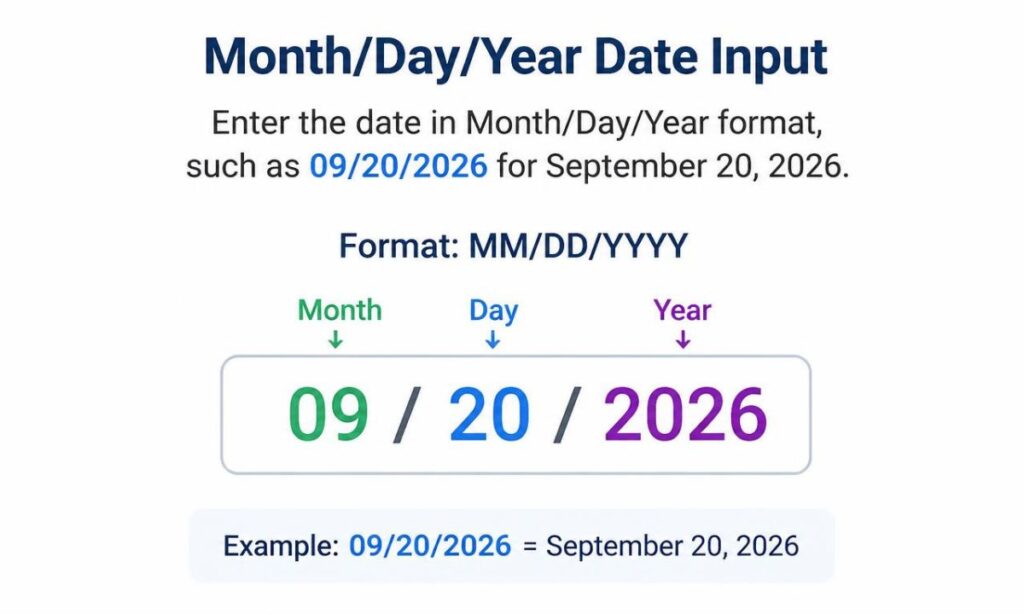
When using an online calculator, entering the date correctly is important. A common format is Month/Day/Year, such as 09/20/2026 for September 20, 2026.
Other calculators may use Day/Month/Year, so don’t assume every tool reads the numbers in the same way. A tiny formatting mistake can turn a perfectly good calculation into a very different date, which is not what anybody wants.
If the calculator includes a calendar icon, selecting the date directly from the calendar can reduce this risk. Once the correct date input is entered, the calculator can perform the requested calculation.
Calculate Months Between Two Dates Online
A date calculator online can be useful when you need to compare two dates quickly. Instead of manually counting every month, you simply provide the start and end points.
For example, you could enter:
Start date: September 20, 2026
End date: April 1, 2027
Operation: Months Between
The resulting calculation result can then show the approximate number of complete months along with any remaining days.
This approach is particularly handy for people who frequently calculate deadlines, project periods, subscriptions, appointments, or upcoming events.
Calculate Future and Past Dates
Date tools aren’t limited to counting toward April. They can also calculate future date values or determine a past date from a known starting point.
For example, you could ask:
- What date is 10 months from September 20?
- What date was 3 months before April 20?
- How many months are between January and April?
- How many months ago was April?
- What is the exact date seven months from now?
These calculations are essentially different versions of the same process. The calculator changes the direction or operation type, while the underlying calendar information remains the same.
Understanding Month Calculation
A month calculation is not always equivalent to dividing a number of days by 30.44. That shortcut can provide an approximation, but actual calendar months have different lengths.
January has 31 days, February normally has 28, April has 30, and several other months contain 31 days. Leap years can also make February one day longer.
Because of this, a calendar-based calculation is generally better when the question involves real dates. It respects the structure of the calendar rather than treating every month as an identical block of time.
Why April Dates Can Be Easy to Miscount
April is close enough to other months that people sometimes count inclusively instead of calculating the actual difference. For instance, seeing September, October, November, December, January, February, March, and April can make the gap appear to be eight months when the actual interval between matching dates is seven months.
This is why a proper date difference calculation is useful. It measures the interval rather than simply counting the names of the months.
A quick count-off can still be helpful for a rough estimate, but exact planning deserves an exact calculation.
A Simple Way to Find Your April Countdown
If you don’t have a calculator available, use this simple process. First, write down your current date. Then choose the exact April date you care about.
Next, compare the month numbers. If you’re counting from September to April of the following year, move forward through October, November, December, January, February, March, and April.
Finally, check the day of the month. If the days match, you have a clean whole-month calculation. If they don’t, include the remaining days in your answer.
This simple method works for basic questions, though an online calculator tool is more convenient when precision matters.
Frequently Asked Questions
How many months until April?
The answer depends on today’s date and which day in April you mean. For example, from September 20, 2026 to April 20, 2027 is exactly seven months.
How many months are left until April?
If counting from September 20, there are roughly seven calendar months until the same date in April. The exact answer changes depending on the April date.
How do I calculate months until April?
Enter today’s date as the start date and your chosen April date as the end date in a month calculator. Select “Months Between” to see the interval.
Can I calculate months and days between dates?
Yes. Many date calculators provide a result showing complete months together with remaining days, which is more precise than a simple month count.
Can I add 10 months to a date?
Yes. Choose the add months option, enter your starting date, and enter 10 as the number of months. The tool will calculate the resulting future date.
Can I subtract 3 months from a date?
Yes. Use the subtract months function to move three calendar months backward from the selected date.
Conclusion
So, how many months till April? There isn’t one answer that stays correct forever. The result depends on the reference date, the exact April date, and whether you want a rough calendar count or an exact calculation.
From September 20, 2026, April 20, 2027 is seven months away, while April 1, 2027 is about six months and eleven days away. These small differences show why exact dates matter when calculating time.
Whether you’re counting the months until April, finding months from now, checking months ago, or calculating a future date, the same basic principle applies: choose your dates carefully and let the calendar do the counting.
A good online months calculator can make this process quick, clear, and much less confusing. And sometimes, seeing that April is only a handful of calendar turns away makes the future feel surprisingly close. The months may pass quietly, but the calendar keeps the count for us.